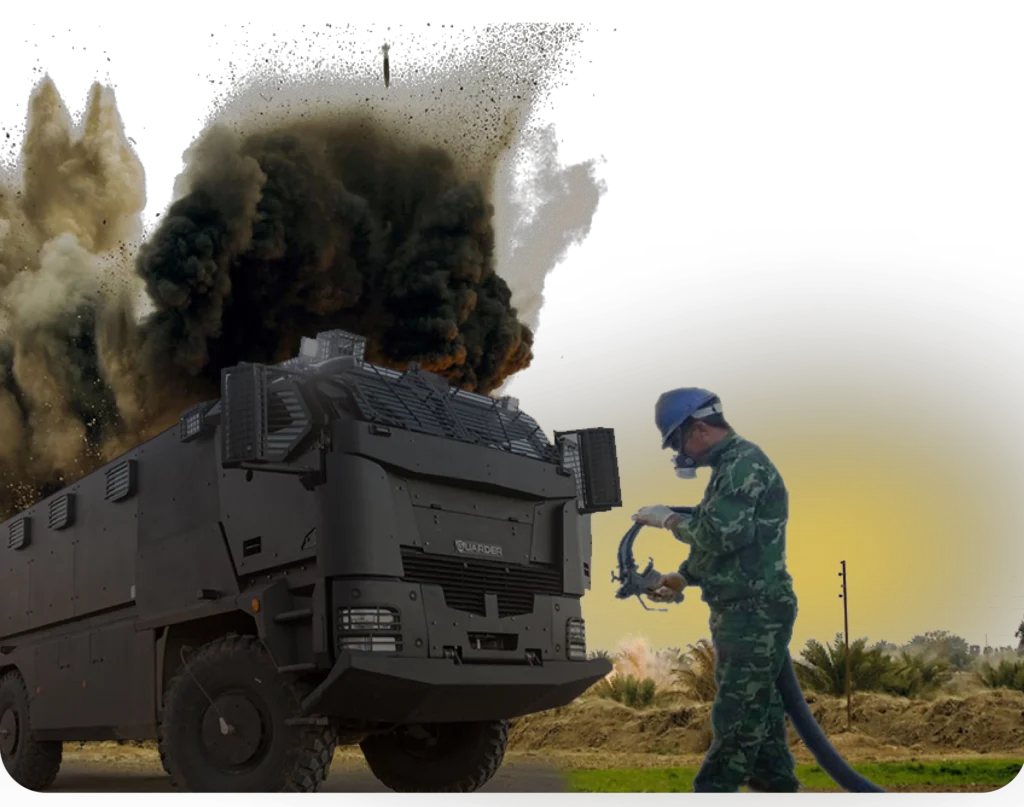
Vehicle blast mitigation is crucial for protecting occupants and ensuring vehicle integrity during explosions. Various techniques and materials are used to safeguard vehicles from the devastating effects of blasts. In this article, we will explore different types of blast mitigation used on vehicles, their mechanisms, and their effectiveness.
Armored Panels
Armored panels are a primary method of blast mitigation on vehicles. These panels are made from materials such as steel, aluminum, or advanced composites. They are designed to absorb and disperse blast energy, protecting the vehicle’s occupants.
Steel panels are strong and provide excellent protection. They can withstand high-impact forces and prevent shrapnel from penetrating the vehicle. However, steel is heavy, which can affect the vehicle’s performance and fuel efficiency.
Aluminum panels offer a lighter alternative to steel. They provide good protection while reducing the vehicle’s overall weight. This helps maintain the vehicle’s maneuverability and speed. Aluminum panels are often used in combination with other materials to enhance protection.
Advanced composite panels combine materials like Kevlar, carbon fiber, and ceramic. These composites offer superior strength and lightweight properties. They absorb and distribute blast energy effectively, providing robust protection without significantly impacting vehicle performance.
Blast-Resistant Glass
Blast-resistant glass is another critical component of vehicle blast mitigation. This type of glass is made by layering multiple sheets of glass and plastic. The layers are bonded together to create a strong, shatter-resistant barrier.
When a blast occurs, the outer layers of the glass absorb the initial impact. The plastic layers prevent the glass from shattering, reducing the risk of injury from flying glass fragments. This laminated structure helps maintain visibility while protecting the vehicle’s occupants.
Blast-resistant glass is used in windows and windshields of military and security vehicles. It provides a clear view while ensuring safety during explosions. The glass can be treated with coatings to enhance its resistance to scratches and environmental damage.
Run-Flat Tires
Run-flat tires are designed to maintain functionality even after being punctured. These tires have reinforced sidewalls that support the vehicle’s weight, allowing it to continue moving even with a loss of air pressure.
In a blast scenario, tires are often damaged by shrapnel or the shockwave. Run-flat tires enable the vehicle to escape from the danger zone, ensuring the safety of its occupants. This feature is especially crucial for military and security vehicles operating in hostile environments.
The design of run-flat tires varies. Some have an internal support ring, while others use reinforced rubber to maintain shape. Both designs allow the vehicle to travel a certain distance at a reduced speed, providing time to reach safety or perform repairs.
Blast Seats
Blast seats are specially designed to protect occupants from the effects of a blast. These seats use energy-absorbing materials and mechanisms to reduce the impact on the occupant’s body.
When a blast occurs, the seat absorbs the energy from the shockwave, minimizing the force transmitted to the occupant. This reduces the risk of injury to the spine and other critical areas. Blast seats are equipped with harnesses and restraints to keep the occupant securely in place during an explosion.
These seats are commonly used in military vehicles, where the risk of blasts is high. The design of blast seats focuses on ergonomics and comfort, ensuring that occupants can remain seated for extended periods without discomfort.
Underbody Protection
Underbody protection is essential for safeguarding the vehicle’s underside from blasts. This protection involves reinforcing the vehicle’s floor and critical components with blast-resistant materials.
The vehicle’s underbody is vulnerable to blasts from improvised explosive devices (IEDs) and landmines. Reinforcing the floor with steel or composite materials helps absorb and deflect the blast energy. This prevents the explosion from penetrating the vehicle and causing severe damage.
In addition to reinforcing the floor, underbody protection includes shielding critical components such as fuel tanks and drive shafts. These components are crucial for the vehicle’s operation and must be protected to ensure the vehicle can continue to function after a blast.
Polyurea Coatings
Polyurea coatings are used to enhance the blast resistance of vehicles. These coatings are applied to the vehicle’s exterior and interior surfaces, forming a tough, flexible layer.
Polyurea absorbs and disperses blast energy, reducing the impact on the vehicle. The coating can be applied to metal, plastic, and composite surfaces, providing comprehensive protection. Polyurea’s fast-curing properties make it ideal for retrofitting existing vehicles or quickly enhancing new ones.
In addition to blast protection, polyurea coatings offer benefits such as corrosion resistance and durability. They protect the vehicle from environmental damage, extending its lifespan and reducing maintenance costs.
Structural Reinforcement
Structural reinforcement involves strengthening the vehicle’s frame and body to withstand blasts. This reinforcement can include adding braces, beams, and other support structures.
Reinforcing the vehicle’s structure helps distribute the blast energy more evenly, reducing the risk of localized damage. This ensures that the vehicle remains intact and operable after an explosion. Structural reinforcement is often used in conjunction with other blast mitigation techniques to provide comprehensive protection.
The design of the reinforcement depends on the vehicle’s type and intended use. Military vehicles, for example, require extensive reinforcement to handle high-intensity blasts. Civilian security vehicles may have lighter reinforcement, focusing on specific threat scenarios.
Conclusion
Blast mitigation on vehicles involves a combination of techniques and materials designed to protect occupants and ensure vehicle integrity during explosions. Armored panels, blast-resistant glass, run-flat tires, blast seats, underbody protection, polyurea coatings, and structural reinforcement each play a crucial role in enhancing vehicle safety. Understanding these methods and their applications helps in choosing the right combination for optimal protection. By implementing these techniques, we can protect lives and maintain vehicle functionality in high-risk environments.