The threat
The 1995 Oklahoma City bombing killed 168 people, including 19 children11. DoD's antiterrorism standard notes that injuries in such attacks come from "flying glass fragments and debris from walls, ceilings, and fixtures"5. Older public buildings often have unreinforced masonry infill that was never designed for blast.
How polyurea helps
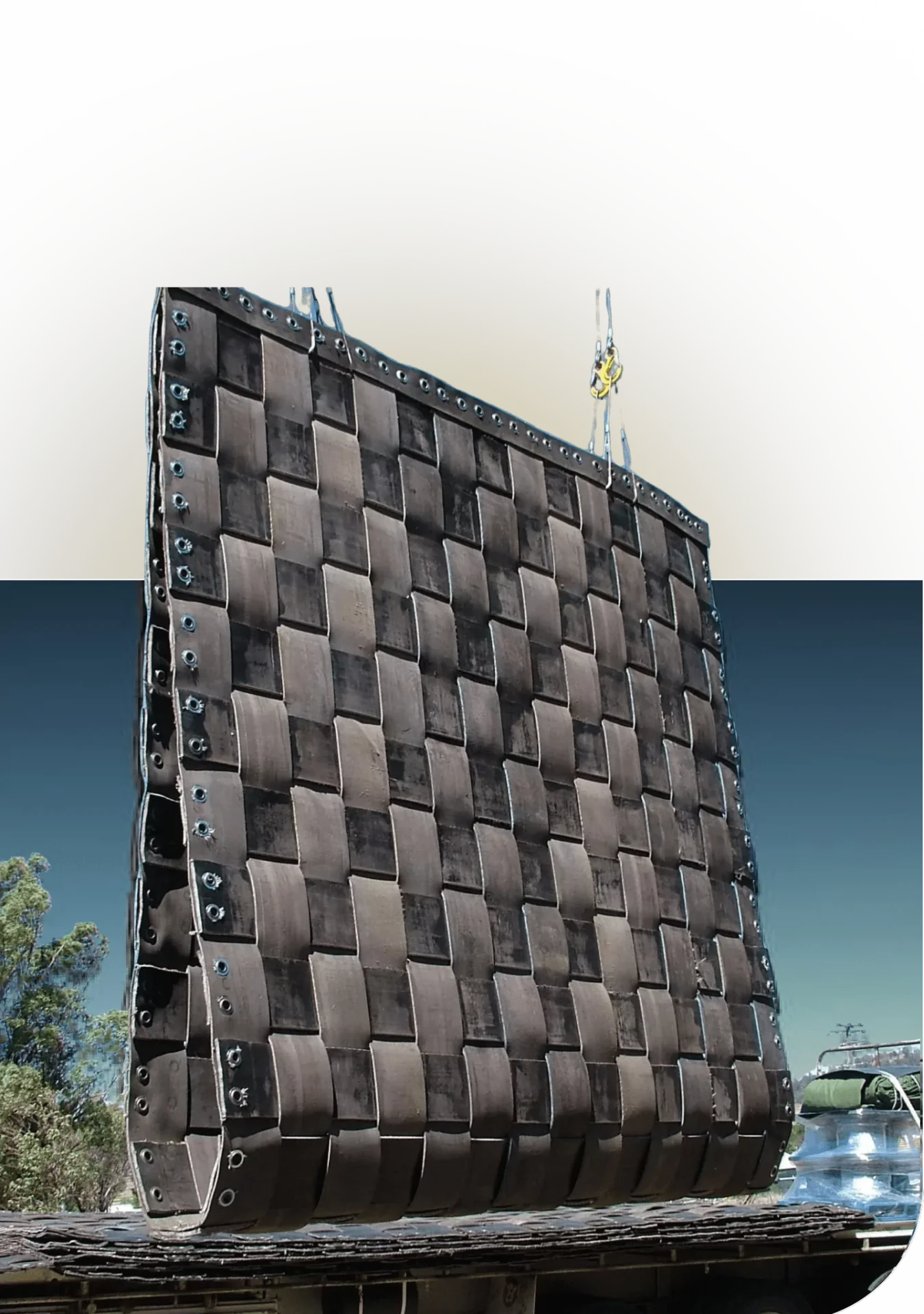
A bonded elastomer on the protected face holds cracked masonry together so the wall bends instead of shattering. Researchers working with AFRL put it plainly: "an elastomer coated to the inside wall of a building can offer significant protection for occupants"2. The cracked wall "is kept together by the elastomer and shields against flying debris"2.
Where it goes
- Interior faces of exterior masonry walls
- Lobby and screening-area partitions
- Mail rooms and loading docks
- Parking-adjacent walls
- Stadium and arena concourse walls
Details that matter
- Glazing is a separate system. The DoD standard requires laminated glass or polycarbonate and does not accept films or curtains as substitutes where compliance is required5.
- Coatings complement standoff, glazing and structural design. They do not replace them.
- Interior work in occupied buildings needs a ventilation and isolation plan for spraying.
Who buys the work
Federal and state facility managers, security integrators, architects, general contractors on renovation work, and venue operators.
These are the customers an ArmorThane blast mitigation applicator sells to. See the business path.
Blast protection is an engineered system. Coatings complement standoff, glazing and structural design, and the engineer of record sets the design.