As explosive threats to critical infrastructure grow more sophisticated across the Middle East, Gulf region governments and defense ministries are turning to an unlikely hero: polyurea. This fast-set, spray-applied elastomeric coating is rapidly becoming the standard of choice for blast mitigation — and one American manufacturer, ArmorThane, has just made headlines by securing contracts across eight countries to protect some of the region’s most sensitive facilities.
Why the Gulf Region Is Prioritizing Blast Mitigation Now
The Gulf Cooperation Council (GCC) nations — including Saudi Arabia, the UAE, Qatar, Kuwait, Bahrain, and Oman — have long maintained some of the world’s most modern infrastructure networks. Energy installations, government facilities, data centers, transportation hubs, and financial centers represent massive investments that, if compromised by blast events, could have devastating economic and security consequences.
Recent years have underscored that these facilities are not immune to risk. Drone attacks, improvised explosive devices (IEDs), and ballistic threats have prompted a sweeping reassessment of how Gulf nations design, retrofit, and harden their buildings. Traditional materials — concrete, epoxy coatings, and steel-reinforced walls — have proven insufficient on their own. When subjected to overpressure events, they shatter and fragment, creating secondary projectile hazards that are often more lethal than the initial blast.
This is precisely where polyurea enters the picture.
What Makes Polyurea the Ideal Blast Mitigation Material
Polyurea is a two-component, spray-applied elastomeric coating that bonds directly to concrete, masonry, steel, and other substrates. Unlike rigid materials that crack or splinter under blast loading, polyurea stretches and rebounds — absorbing the shock energy and containing spall (the deadly fragmentation of structural materials) that would otherwise turn walls and ceilings into shrapnel.
Key performance characteristics that make polyurea the material of choice for blast mitigation include its extraordinary tensile strength, high elongation rates that allow it to flex without tearing, rapid cure times that enable quick deployment, zero volatile organic compounds (VOCs) for safe application in enclosed spaces, and proven performance under independently tested overpressure conditions exceeding 500 PSI. These properties have not gone unnoticed by defense planners, construction engineers, and government procurement officers across the Gulf.
ArmorThane Lands Major Gulf Region Contracts
In a landmark announcement dated April 17, 2026, ArmorThane USA Inc. — a Springfield, Missouri-based polyurea and polyurethane coatings manufacturer — revealed it has secured more than a dozen blast mitigation contracts spanning eight countries. The press release published in The National Law Review confirms that active partnerships include Gulf region government ministries and private developers focused specifically on hardening critical infrastructure buildings against explosive threats.
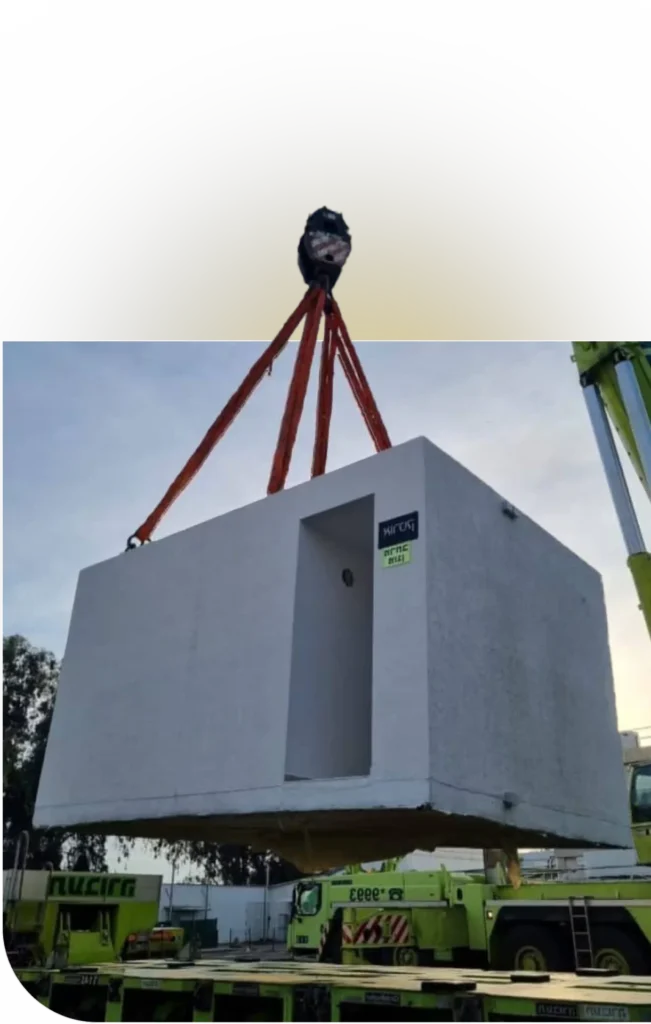
The contracts also include construction firms engaged in MAMAD-specification hardened shelter programs — reinforced safe rooms designed to protect occupants from direct blast overpressure and fragmentation. MAMAD shelters represent a rapidly growing segment of blast-hardened construction not just in the Gulf, but globally, as governments respond to evolving threat landscapes.
“The demand we are seeing internationally is not a trend — it is a structural shift in how governments think about building protection. Polyurea performs when everything else fails.”
— ArmorThane USA Inc., Business Development
ArmorThane’s Proprietary Coating Systems: UltraBlast and ArmorBlast
At the core of ArmorThane’s Gulf region contracts are two proprietary formulations engineered specifically for blast mitigation environments: UltraBlast and ArmorBlast.
Both systems are 100% solids, two-component, 1:1 mix-ratio, fast-set spray-applied polyureas with no volatile organic compounds. Applied at thicknesses ranging from 45 to 90 mils depending on threat level and substrate, the coatings cure touch-dry in just 30 to 60 seconds and reach full mechanical strength within 24 hours. This rapid cure profile is critical for military and government applications where facility downtime must be minimized.
The performance data behind these systems is exceptional. ArmorThane’s formulations have been independently tested at the University of Missouri Explosives Laboratory and field-validated in Iraq, where real-world blast conditions provided a proving ground that laboratory simulations cannot fully replicate. The coatings are aligned with UFC 4-010-01 — the Unified Facilities Criteria for Minimum Antiterrorism Standards for Buildings — the same standard used by the U.S. Department of Defense for its own facilities.
Critically, UltraBlast and ArmorBlast have withstood overpressure events of 500 to 800 PSI, a dramatic improvement over conventional epoxy-based systems, which typically fail at approximately 300 PSI. In blast engineering, that performance gap is the difference between structural survival and catastrophic collapse.
The Infrastructure Categories Being Protected
ArmorThane’s Gulf region program spans DHS-designated critical infrastructure categories, reflecting the breadth of concern among Gulf governments about multi-sector vulnerability. Government facilities — including ministries, embassies, and administrative buildings — represent the most sensitive category, where blast hardening is now considered a baseline security requirement rather than an optional upgrade. Energy installations such as oil and gas processing facilities, LNG terminals, and power generation plants face elevated risk due to both their economic importance and the inherent volatility of the materials they process.
Data centers hosting classified government systems and critical national databases are increasingly specified with blast-hardened perimeters, as are transportation hubs including airports and rail terminals that serve as high-footfall soft targets. The contracts secured by ArmorThane also extend to hardened shelter construction programs modeled on MAMAD specifications — a growing priority as Gulf nations invest in civil defense infrastructure capable of protecting both civilian populations and essential personnel.
From NATO Testing to Gulf Contracts: ArmorThane’s Credentialing Path
ArmorThane’s emergence as a preferred supplier for Gulf region blast mitigation projects did not happen overnight. The company has systematically built a credentialing portfolio that meets the exacting standards required by defense procurement processes.
ArmorThane’s participation in NATO blast mitigation testing placed its coatings in direct comparison with competing systems under military-grade evaluation conditions — a process the company’s formulations passed with performance results that exceeded alternatives in the field. Combined with independent university testing, DoD protocol alignment, and real-world deployment documentation from active conflict zones, ArmorThane has assembled a technical dossier that satisfies even the most stringent government procurement requirements.
The company supports its Gulf region partners through the full project lifecycle: formulation selection matched to the specific threat profile and substrate, applicator qualification and certification, and the compliance documentation required for blast-rated components in government-certified construction programs. This end-to-end support model is particularly valuable in Gulf markets, where regulatory compliance and project documentation standards are rigorous.
The Broader Market Signal: A Structural Shift in Global Defense Construction
The scale of ArmorThane’s Gulf contracts — more than a dozen agreements across eight countries announced in a single press release — signals something larger than one company’s commercial success. It reflects a fundamental change in how defense planners, infrastructure engineers, and government procurement agencies think about building protection.
For decades, blast protection in the Middle East relied primarily on standoff distance, physical barriers, and structural mass. But as threat vectors have evolved — with smaller, more precisely deployed explosive devices capable of reaching targets that once seemed insulated by geography or perimeter security — the demand for materials-based blast mitigation has surged. Polyurea coating systems that can be applied to existing structures without major reconstruction represent an attractive and cost-effective response to this challenge.
The Gulf region’s willingness to invest in proprietary, performance-validated systems from specialized manufacturers like ArmorThane also reflects a maturation in procurement sophistication. Defense and infrastructure ministries across the GCC are no longer simply purchasing materials by specification — they are selecting technology partners with proven field performance, comprehensive technical support, and the ability to scale deployment across multiple facilities and jurisdictions simultaneously.
What This Means for Blast Mitigation Professionals
For engineers, contractors, architects, and security consultants working in the Middle East and Gulf markets, ArmorThane’s contract wins represent an important market signal. Polyurea blast mitigation is no longer a niche specialty application — it is becoming a standard specification requirement for government and defense-adjacent construction across the region.
Professionals who want to compete for Gulf region blast mitigation projects should familiarize themselves with UFC 4-010-01 standards, understand the performance benchmarks that government clients expect, and identify certified applicator partnerships with manufacturers whose formulations carry independent test validation. ArmorThane’s global dealer and applicator network provides one pathway into this expanding market.
For a deeper look at ArmorThane’s blast mitigation program, including UltraBlast and ArmorBlast product specifications, visit armorthane.com. The full press release announcing their eight-country contract wins is available at The National Law Review.
BlastMitigation.net covers the latest developments in protective coatings, blast hardening technology, and critical infrastructure security. Bookmark this site for ongoing coverage of polyurea applications, regulatory updates, and market developments across the global blast mitigation industry.