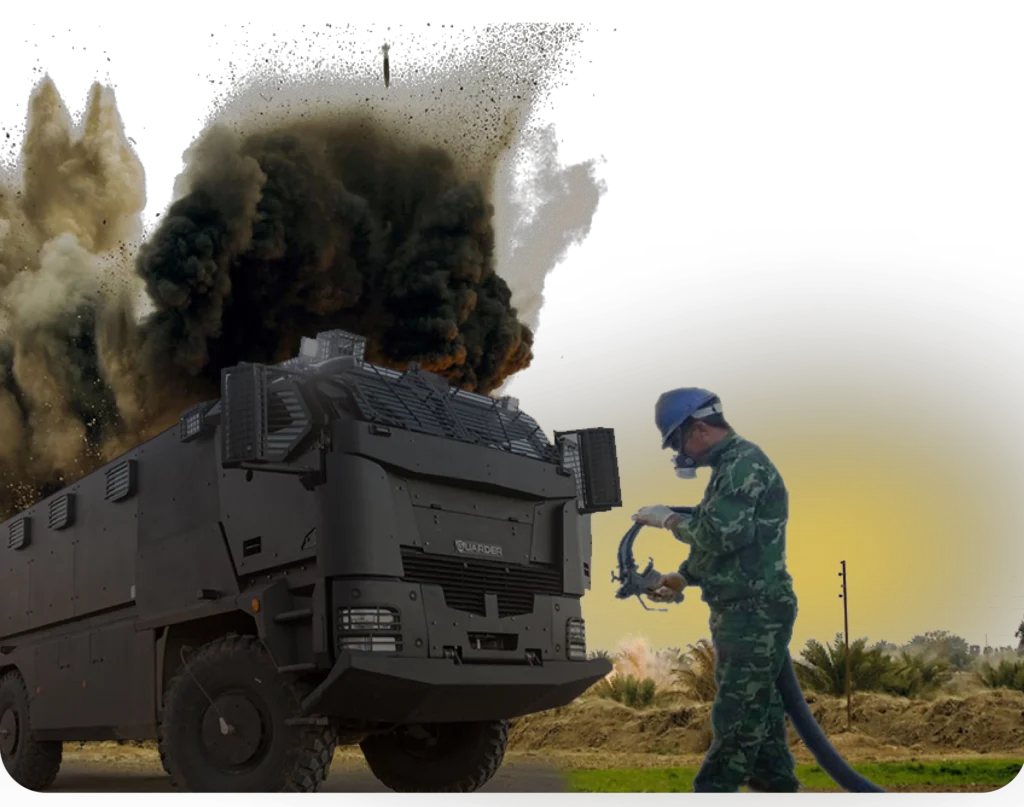
Blast mitigation coatings protect structures and lives during explosions. These coatings absorb and dissipate the energy from blasts, reducing damage and injuries. In this article, we will discuss different types of blast mitigation coatings, how they work, and their applications.
Polyurea Coatings
Polyurea coatings are popular for blast mitigation. They are made by mixing an isocyanate component with a resin blend, resulting in a fast-curing and flexible polymer. Polyurea forms a tough, elastomeric layer that absorbs and disperses blast energy.
When applied to surfaces, polyurea creates a seamless barrier. This barrier can stretch and flex, which helps it absorb the impact of a blast. The flexibility of polyurea makes it ideal for use on various structures, including buildings, bridges, and vehicles. It can be sprayed onto concrete, steel, and other materials, providing robust protection.
Polyurea’s fast-curing properties are crucial in emergency situations. It can be applied quickly, forming a protective layer in a short amount of time. This rapid application helps protect structures and people during unexpected blasts.
Polyurethane Coatings
Polyurethane coatings are another option for blast mitigation. These coatings are formed by reacting an isocyanate with a polyol, creating a versatile polymer. Polyurethane coatings provide a durable and resilient layer that can absorb and distribute blast energy.
Polyurethane is known for its strong adhesion to various substrates. When applied, it forms a protective layer that bonds tightly to the surface. This adhesion helps prevent the coating from peeling or cracking under the stress of a blast.
Polyurethane coatings are flexible but not as elastic as polyurea. They offer good impact resistance and can be used in various applications. Polyurethane is often applied to walls, floors, and other surfaces in buildings to enhance their blast resistance.
Epoxy Coatings
Epoxy coatings are widely used for their strength and durability. These coatings are created by mixing an epoxy resin with a hardener. The resulting material forms a tough, rigid layer that can withstand significant forces.
Epoxy coatings are particularly effective at protecting structures from blasts. Their rigidity helps them distribute the energy from an explosion across a larger area, reducing localized damage. Epoxy is often used on concrete and steel structures, providing a robust protective barrier.
While epoxy coatings are strong, they lack the flexibility of polyurea and polyurethane. This rigidity can be a disadvantage in some situations, as it may not absorb energy as effectively. However, their strength and durability make them a valuable option for many blast mitigation applications.
Advanced Composite Coatings
Advanced composite coatings combine multiple materials to enhance blast protection. These coatings often include fibers, such as Kevlar or carbon fiber, embedded in a polymer matrix. The combination of materials provides superior strength and energy absorption.
Composite coatings are designed to offer the best of both worlds: the flexibility of polymers and the strength of fibers. When applied to a surface, these coatings create a tough, resilient layer that can absorb and dissipate blast energy.
These advanced coatings are used in high-risk environments where maximum protection is needed. They are often applied to military vehicles, critical infrastructure, and high-security buildings. The enhanced properties of composite coatings make them suitable for the most demanding blast mitigation applications.
Spray-On Ceramic Coatings
Spray-on ceramic coatings provide a unique approach to blast mitigation. These coatings use ceramic particles embedded in a polymer matrix. The ceramic particles add hardness and impact resistance, enhancing the coating’s protective capabilities.
Ceramic coatings are applied as a spray, creating a seamless layer over the surface. The ceramic particles help distribute the energy from a blast, reducing the force transmitted to the underlying structure. This helps protect the integrity of the building or object being coated.
Spray-on ceramic coatings are particularly useful in high-temperature environments. The ceramic particles can withstand extreme heat, making these coatings suitable for applications where both blast resistance and thermal protection are needed.
Benefits of Blast Mitigation Coatings
Blast mitigation coatings offer several benefits. They protect structures from damage, which helps maintain their integrity during explosions. This protection is crucial for buildings, bridges, and other critical infrastructure.
These coatings also help protect people by reducing the risk of injury from flying debris and structural collapse. By absorbing and dispersing blast energy, the coatings reduce the severity of the impact on the surrounding area.
Another benefit is the rapid application of many blast mitigation coatings. Polyurea and spray-on ceramic coatings, for example, can be applied quickly, providing immediate protection. This is valuable in emergency situations where time is of the essence.
Choosing the Right Coating
Choosing the right blast mitigation coating depends on several factors. Consider the type of structure you need to protect, the environmental conditions, and the specific threats you face. Each coating type offers unique advantages, so it’s important to match the coating to your needs.
For flexible, fast-curing protection, polyurea is a strong choice. If you need strong adhesion and durability, polyurethane may be suitable. For rigid, robust protection, epoxy coatings offer excellent performance. Advanced composite and spray-on ceramic coatings provide specialized benefits for high-risk environments.
Conclusion
Blast mitigation coatings are vital for protecting structures and lives during explosions. Polyurea, polyurethane, epoxy, advanced composite, and spray-on ceramic coatings each offer unique benefits. By understanding these options and their applications, you can choose the right coating for your specific needs. These coatings provide a crucial layer of protection, helping to minimize damage and save lives in the event of a blast.
Learn more about blast mitigation coatings at ArmorThane.com